How One Trader Earned $1 Million Using Wallet Tracking Strategy
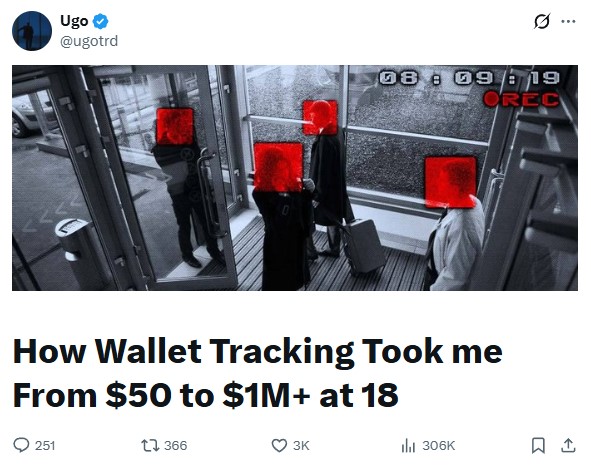
In the world of crypto trading, most people lose money chasing hype. A few, however, learn to follow data instead of narratives. One trader’s journey from just $50 to over $1 million in under a year is a clear example of how wallet tracking can outperform speculation when executed with discipline.
Rather than relying on viral tweets or Telegram calls, his strategy centered on a single principle: track what smart money does before the market reacts.
This article breaks down how that system worked, why it was repeatable, and how on-chain analytics tools made it possible.
The Core Insight: Price Moves Start in Wallets, Not on Twitter
Early in his trading journey, this trader made the same mistake most beginners do, buying memecoins based on branding, memes, or influencer noise. While some trades worked, most were random outcomes with no consistent edge.
The turning point came when he realized something critical:
By the time a token is trending on X or Telegram, the best entries are already gone.
Every major crypto move starts quietly, inside a small cluster of wallets accumulating before any public promotion begins. Instead of asking “What is everyone talking about?”, he began asking:
“Who is buying right now?”
Building a Wallet Tracking Strategy From Scratch
Wallet tracking isn’t about copying one lucky trade. It’s about recognizing behavioral patterns and executing them repeatedly with risk control.
Over time, his strategy evolved into four core layers.
1. Tracking Influencer Wallets (Early Phase)
In early 2024, many influencers still reused wallets. By identifying wallets linked to accounts with real distribution power, he could see accumulation before the shill.
The pattern was simple:
- Influencer accumulates quietly
- Promotion follows
- Liquidity floods in
With small capital and fast execution, this phase helped him grow his account from double digits to five figures quickly, without competing with large traders.
2. Cabal Confirmation: Following Groups, Not Individuals
As wallet hygiene improved across the market, single-wallet tracking became less reliable. The strategy adapted.
Instead of watching one wallet, he began tracking clusters of wallets connected to the same trading circles — often called cabals.
When multiple known traders accumulated the same token within a narrow market cap range, it signaled intentional coordination, not randomness. This group confirmation dramatically improved win rate and confidence.
3. Fresh Wallet & Dev Funding Analysis
As competition increased, the edge shifted again.
The trader began tracing fresh wallets funded directly from centralized exchanges, linking them back to known developers or repeat launchers. This required:
- Tracking CEX outflows
- Matching timestamps
- Monitoring bundling behavior
This layer allowed entries within minutes of launches, often before public awareness existed at all.
4. Market Maker Wallets and Liquidity Games
At the most advanced level, the strategy focused on market maker behavior.
Market makers often move tokens between internal wallets early, manipulate price through aggressive sells, or engineer volatility to shake out weak hands. By identifying these wallets, the trader could:
- Enter before major campaigns
- Re-enter during engineered dumps
- Exit into planned expansions
This wasn’t guesswork, it was observing incentives on-chain.
Risk Management: Why This Strategy Didn’t Blow Up
Turning $50 into $1M wasn’t about oversized bets.
Key rules included:
- Never risking more than 5% per trade
- Scaling position size based on confirmation strength
- Planning exits before entry
- Avoiding emotional decision-making
Wallet tracking rewards discipline, not greed. Oversizing would have made the strategy fragile, and visible.
The Role of On-Chain Analytics Tools
Manually tracking wallets across chains is possible, but not scalable.
This is where professional tools matter.
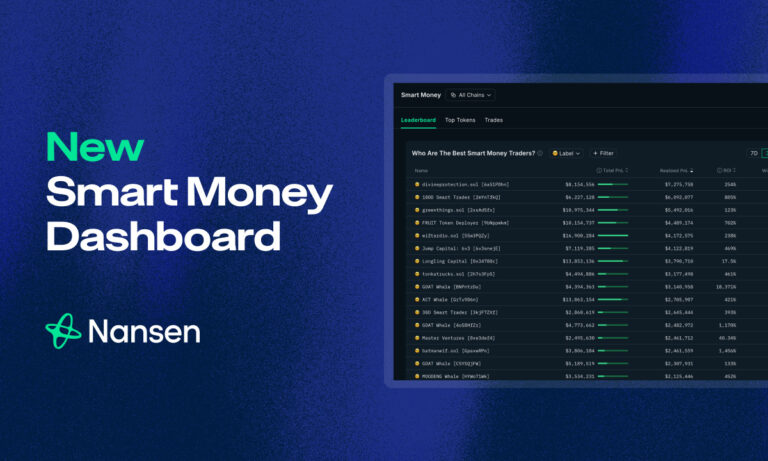
Platforms like Nansen turn raw blockchain data into actionable signals by:
- Labeling millions of wallets
- Identifying smart money behavior
- Tracking wallet clusters and fund flows
- Providing alerts and dashboards across chains
Instead of staring at transaction hashes, traders can immediately see who is buying, where funds are coming from, and what patterns repeat over time.
Is Nansen Worth It?
Because of its premium analytics, Nansen’s Pro plan isn’t cheap, and it’s not designed for casual users.
But for traders serious about:
- Wallet tracking
- Smart money analysis
- Early trend detection
The cost can be justified as a research investment, not a subscription.
If you plan to upgrade, I’m partnering with Nansen to give 10% off your first Pro upgrade.
Just enter my name “kaito” at checkout.
Read more about nansen here: What is Nansen? Review nansen.ai
Final Thoughts: Data Over Noise
This story isn’t about luck or gambling.
It’s about:
- Removing opinion
- Ignoring hype
- Following incentives visible on-chain
Wallet tracking works because blockchains don’t lie. Every large move leaves a footprint, long before it becomes a headline.
For traders willing to study behavior instead of narratives, this approach proves one thing clearly:
You don’t need to predict the market.
You just need to observe who already knows.
All for information purposes only and not to be considered investment advice. You should do your own research before making investment decisions. Kaito is not a financial advisory entity and will not be responsible for any investment decisions you make.
- Follow me on X: https://x.com/kaitoxbt
- My youtube channel: Youtube
- My telegram channel: Telegram
- Crypto exchange you should use: Binance - Bybit